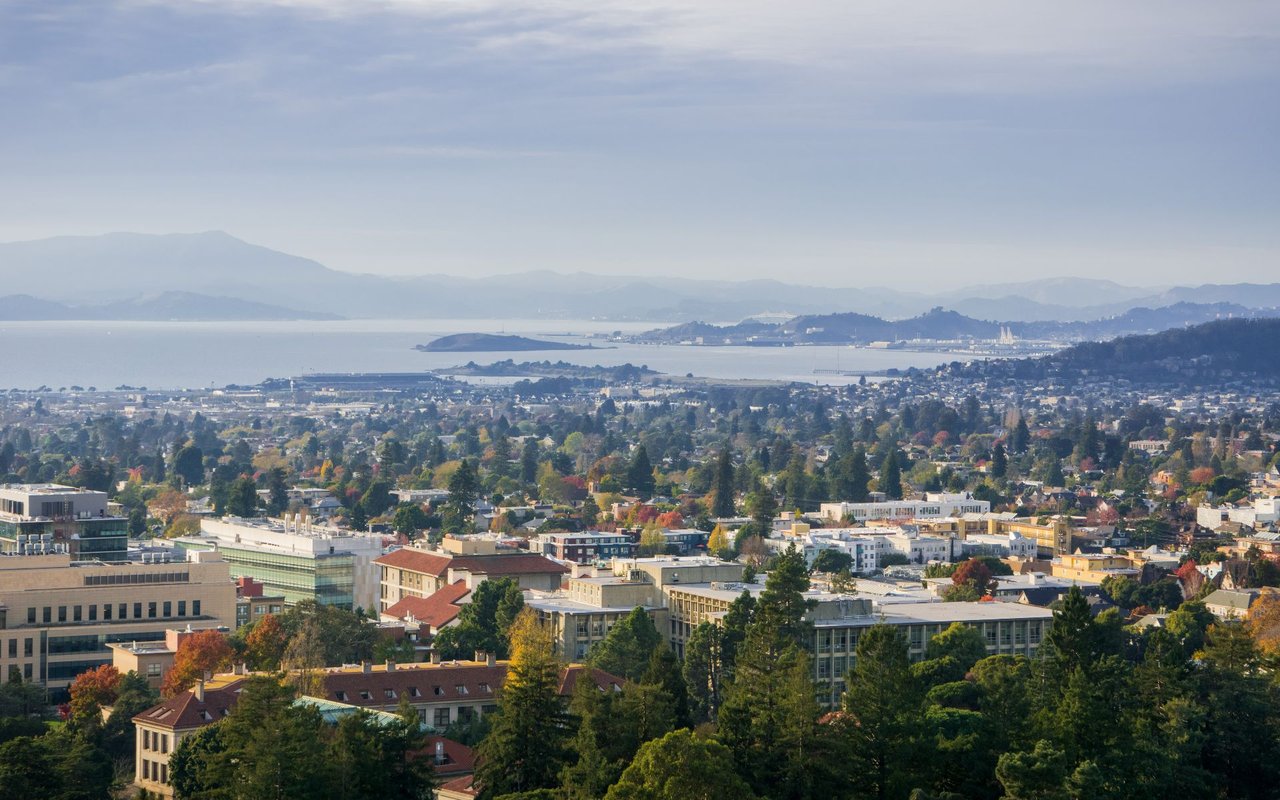
North Berkeley sits north of downtown Berkeley and the UC campus, with residential streets running from North Berkeley BART east through North Shattuck and toward the lower hills. Its boundaries are informal, but the appeal is easy to recognize: iconic early Berkeley architecture, leafy gardens, a destination food district, useful transit, and daily errands close to home.
Rachel Sheftel moved to the East Bay to attend UC Berkeley and never left. She’s lived all over the city and now calls North Berkeley (specifically Thousand Oaks) home. That firsthand familiarity gives Little Hill a practical feel for how North Berkeley changes from block to block – and what buyers should notice.
West of Shattuck Avenue, flatter streets largely follow a compact grid around North Berkeley BART. And east of Shattuck, the blocks begin to rise toward the hills, bringing a more varied terrain and occasional Bay outlooks.
North Berkeley’s housing reflects several building eras – from early-20th-century Craftsman homes and California bungalows, to Spanish Colonial Revival houses and the iconic Berkeley brown shingles.
Many homes have been expanded or reworked over time. Read additions, converted lower levels, decks, and updated kitchens can add useful space, but they also make review of permit history and floor-plan flow an important part of the buying processes. Buyers should look at how the home connects to its garden, where natural light comes from, and whether later changes preserved the details that give the house its character.
North Shattuck, centered around Shattuck Avenue and Vine Street, is the neighborhood’s best-known commercial pocket. Chez Panisse, the Cheese Board, and the original Peet’s sit among bakeries, cafes, food shops, restaurants, galleries, and more. The year-round North Berkeley Farmers’ Market sets up on Thursday afternoons, adding another reason to make the district part of the weekly routine.
North Berkeley BART offers direct service toward Oakland and San Francisco, and the station connects to the Ohlone Greenway for walking and biking. The City and BART are also advancing plans for new housing, public space, and community amenities at the station, making this an important area for buyers to follow.
On the east side of the neighborhood, Live Oak Park brings shaded lawns, tennis and basketball courts, playgrounds, picnic areas, a community center, and more to a site just off Shattuck Avenue. Nearby Thousand Oaks and Westbrae add Solano Avenue and Hopkins Street to the options for groceries, meals, and weekend errands.
Rachel Melby
Monterey Market: “The parking lot is wild, but that’s how you know it's good.”
Cafenated Coffee: “I come here often because the back patio is massive and they serve food — perfect for working or catching up. And you’ll always find a spot.”
Rachel Sheftel
Saul’s: “I’m originally from LA, so the fact that we only have one Jewish deli blows my mind. But thank god I can get my matzo ball soup fix at Saul’s”
Cheeseboard: “You can’t have family or friends visit Berkeley without taking them to Cheeseboard. Live music and a daily pie, chefs kiss.”
Buying in North Berkeley starts with deciding which version of daily life matters most.
Blocks around North Shattuck put restaurants, coffee, groceries, and the farmers market close at hand.
Homes near BART offer a straightforward commute and easy access to the Ohlone Greenway.
Farther east, rising streets can bring views and a more tucked-away feel while keeping parks and shopping within reach.
Because much of the housing stock is older, review foundation and seismic work, electrical and plumbing systems, roof and drainage history, permits, and converted spaces.
Architecturally significant homes may also carry a landmark or Structure of Merit designation, so buyers planning exterior changes should confirm a property’s status with the city.
For buyers drawn to early Berkeley architecture, serious food culture, easy BART access, parks, and tree-lined streets, North Berkeley puts many of the city’s most distinctive qualities close together. The right block can make coffee, dinner, a park, and the commute feel like easy pieces of your routine.
12,722 people live in North Berkeley, where the median age is 40 and the average individual income is $84,504. Data provided by the U.S. Census Bureau.
Total Population
Median Age
Population Density Population Density This is the number of people per square mile in a neighborhood.
Average individual Income
North Berkeley has 5,946 households, with an average household size of 2. Data provided by the U.S. Census Bureau. Here’s what the people living in North Berkeley do for work — and how long it takes them to get there. Data provided by the U.S. Census Bureau. 12,722 people call North Berkeley home. The population density is 20,086 and the largest age group is Data provided by the U.S. Census Bureau.
Total Population
Population Density Population Density This is the number of people per square mile in a neighborhood.
Median Age
Men vs Women
Population by Age Group
0-9 Years
10-17 Years
18-24 Years
25-64 Years
65-74 Years
75+ Years
Education Level
Total Households
Average Household Size
Average individual Income
Households with Children
With Children:
Without Children:
Marital Status
Blue vs White Collar Workers
Blue Collar:
White Collar: