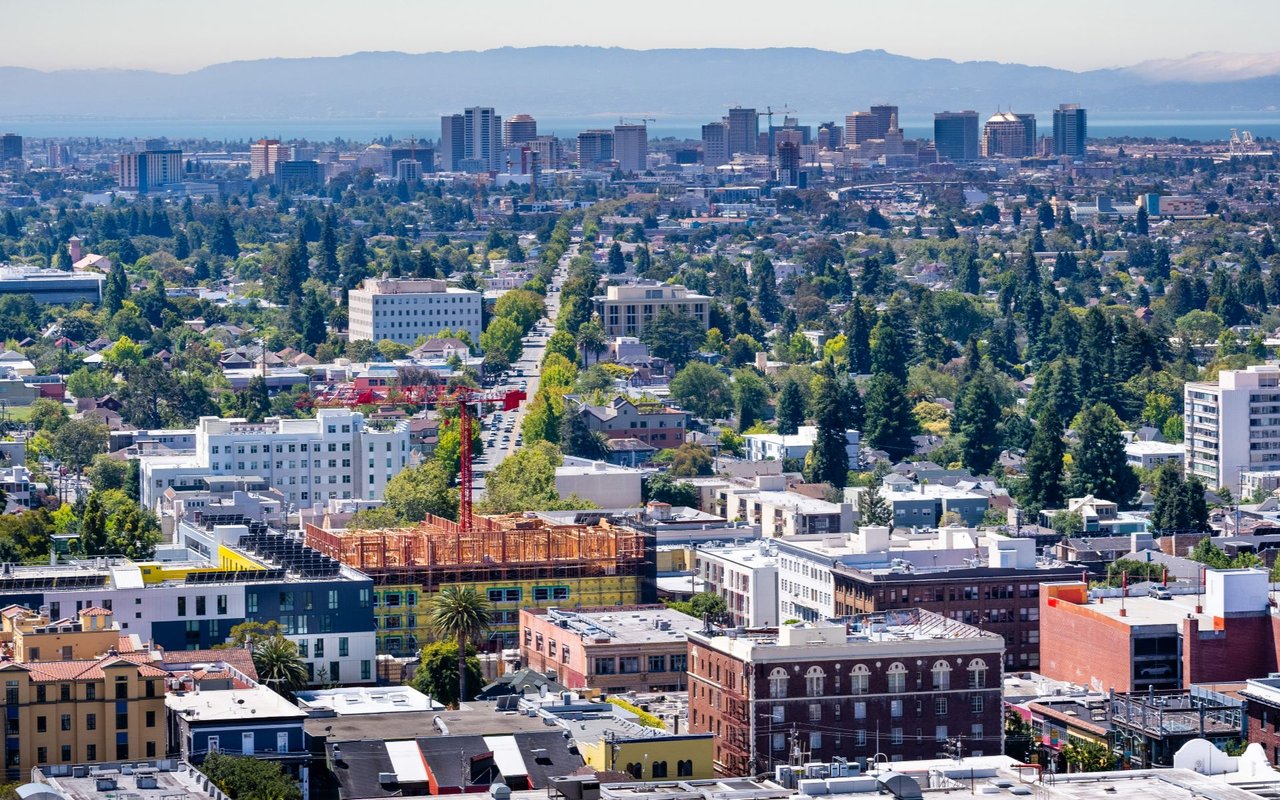
Berkeley, California stretches from the San Francisco Bay to the Berkeley Hills, with UC Berkeley near its center and distinct residential and commercial districts in every direction. Buyers often focus here for a combination of older homes with more character, three BART stations, independent shopping and dining, and quick access to both culture and open space.
Berkeley does not have one defining neighborhood feel, but many unique feels. The flatter blocks of South, Central, and West Berkeley, the neighborhoods around campus, and the hillside streets to the east each offer a different version of daily life.
Berkeley’s housing reflects more than a century of growth. The city’s general plan says most of its buildings were constructed between 1875 and 1940, and identifies the Bay’s Arts and Crafts movement as an “important part of Berkeley’s architectural character.”
Across the city, buyers may encounter Victorian-era houses, Craftsman bungalows, Spanish Revival homes, duplexes, flats, apartment buildings, and newer condominiums.
In the flatter parts of Berkeley, streets generally follow a grid, often placing homes close to neighborhood shopping, parks, and bike routes. Closer to downtown and the university, apartments, condominiums, and multiunit properties become more common. To the east, the city climbs into the hills, where curving streets, wooded settings, and Bay views create a noticeably different experience.
Northern Berkely also contains several distinct areas worth exploring, including North Berkeley, Westbrae, and Thousand Oaks.
Berkeley works as a network of neighborhood centers rather than a city built around one main street. Its commercial districts include Downtown, Telegraph Avenue, Elmwood, Fourth Street, Lorin, Gilman, University Avenue, North Shattuck, and Solano Avenue. That gives residents many places to shop, eat, see a performance, or run everyday errands without always heading to the same part of town.
UC Berkeley is a major part of the city, but its public-facing museums, performances, lectures, gardens, and grounds extend well beyond campus life. Local destinations include BAMPFA, the UC Botanical Garden, and the Lawrence Hall of Science, along with downtown theaters and live-music venues.
Outdoor access changes from one side of the city to the other. At the Berkeley Waterfront, César Chávez Park, the Marina, and the Bay Trail offer open space, walking, biking, and wide Bay views. In and above the hills, neighborhood parks connect residents to the Berkeley Rose Garden and nearby Tilden Regional Park.
Berkeley is served by North Berkeley, Downtown Berkeley, and Ashby BART stations, along with AC Transit routes throughout the city. And for buyers with school-aged children, access to Berkeley Unified School District is a major reason Berkeley makes the shortlist. BUSD includes 11 elementary schools, three middle schools, one comprehensive high school, an alternative high school, preschool facilities, and an adult school. Its programs include music and the arts, libraries, gardens and nutrition, science, health, and physical education.
Rachel Melby
Imsala Collective: “Three shops in one: Masterpiece coffee, Min’na childrensware, and Clove & Whole vintage finds."
Rose Pizzeria: “The Shewolf pizza and the spicy caesar are a masterful combination.”
Rachel Sheftel
The Hidden Cafe: “Coffee, tea, and treats behind a beautiful brick facade in Strawberry Creek Park. Bring a picnic blanket!”
Tarrocco: “Fresh, healthy lunch fare with a Spanish twist. Plus a super chic space!”
Buying in Berkeley starts with deciding what you want close to home.
The areas around Downtown, Ashby, and North Berkeley BART make regional transit easier.
Homes near commercial districts put groceries, restaurants, and local shops within walking or biking distance.
Living near UC Berkeley brings quick access to campus attractions and cultural events.
The hills offer views, winding streets, and nearby trails.
For an older home, review foundation and seismic work, electrical and plumbing systems, roof and drainage history, permits, and converted spaces. In the hills, buyers should also understand slope, drainage, retaining walls, wildfire requirements, evacuation access, and insurance availability.
For buyers drawn to older homes, a selection of business districts, useful transit, and parks stretching from the Bay to the hills, Berkeley offers an unusually rich daily radius. Finding the right fit comes down to deciding which part of Berkeley life you want closest to your front door.
127,190 people live in Berkeley, where the median age is 36.9 and the average individual income is $69,514. Data provided by the U.S. Census Bureau.
Total Population
Median Age
Population Density Population Density This is the number of people per square mile in a neighborhood.
Average individual Income
Berkeley has 49,427 households, with an average household size of 2.4155555555555557. Data provided by the U.S. Census Bureau. Here’s what the people living in Berkeley do for work — and how long it takes them to get there. Data provided by the U.S. Census Bureau. 127,190 people call Berkeley home. The population density is 13,813 and the largest age group is Data provided by the U.S. Census Bureau.
Total Population
Population Density Population Density This is the number of people per square mile in a neighborhood.
Median Age
Men vs Women
Population by Age Group
0-9 Years
10-17 Years
18-24 Years
25-64 Years
65-74 Years
75+ Years
Education Level
Total Households
Average Household Size
Average individual Income
Households with Children
With Children:
Without Children:
Marital Status
Blue vs White Collar Workers
Blue Collar:
White Collar: