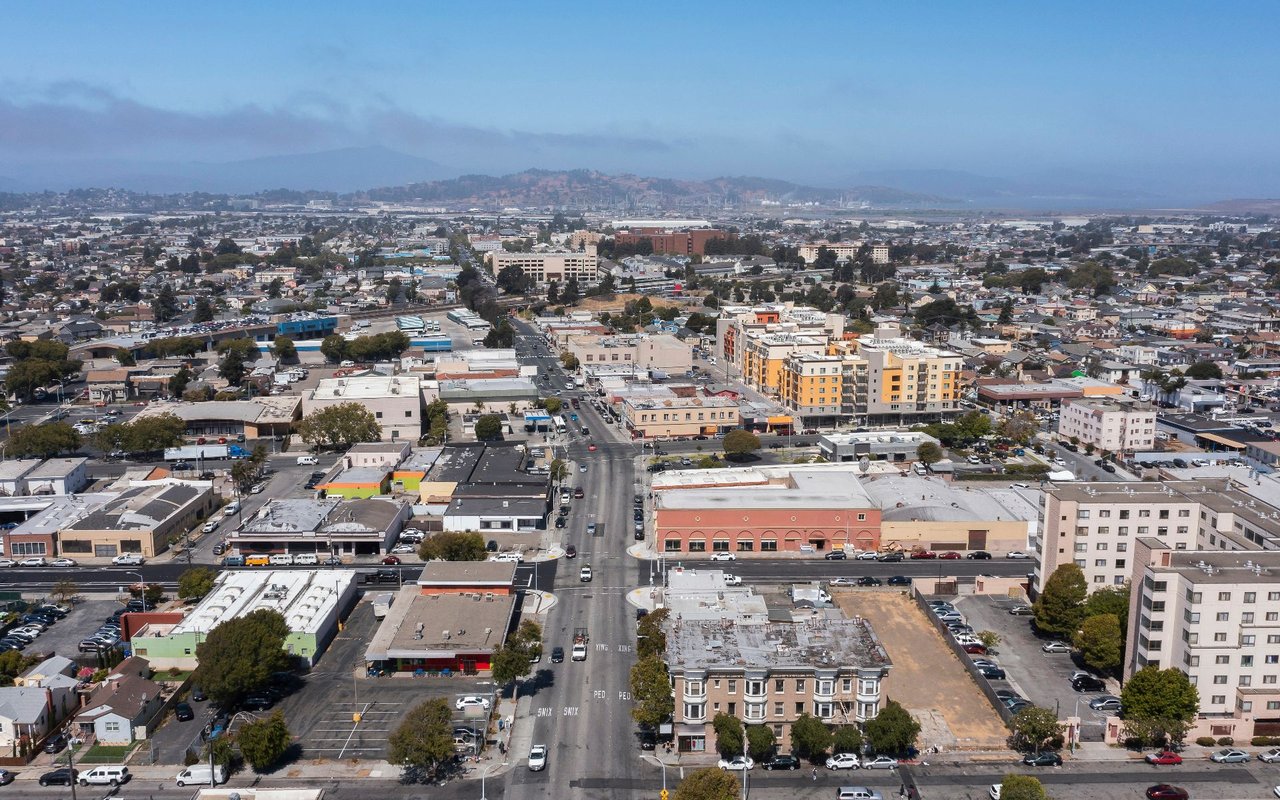
Richmond stretches from the San Francisco Bay shoreline to the hills beyond I-80, covering a wider range of settings than most nearby cities in the Inner East Bay. Point Richmond has a compact, historic center; Richmond Annex and North & East are largely residential; Marina Bay follows the shoreline; and Hilltop and May Valley feel more suburban.
The variety is part of what makes Richmond a great place to live. Buyers can prioritize BART or ferry access, the Bay Trail, older architecture, yard space, water views, or a hillside setting – and still remain within one city. Because Richmond’s neighborhoods are spread out, it helps to begin your search with the kind of daily routine you want.
Richmond’s housing follows the city’s rich history, with the largest share of homes being built from 1940 through 1959, during and after the city’s wartime growth.
Point Richmond, one of the city’s earlier communities, is known for Victorian architecture and older homes near its compact center. In Richmond Annex and North & East, buyers often encounter small bungalows and other modest detached houses on flatter, more regular street grids. Atchison Village adds another piece of Richmond history: built in 1941 for shipyard workers, its simple wood duplexes and fourplexes are now managed cooperatively by homeowners.
Later development brought ranch and split-level homes to the hillier areas, along with newer detached homes, townhomes, and condominiums around Marina Bay. And the streets change with the housing – from the compact blocks of Point Richmond to flatter central neighborhoods and broader, curving streets in the hills.
Richmond is a great spot for commuters, with three distinct options: BART, regional rail, and ferry service. Richmond Station is both a BART terminus and an Amtrak stop, with Capitol Corridor and other rail connections. From Marina Bay, the Richmond ferry provides daily service to downtown San Francisco. Some southern neighborhoods, including Richmond Annex, are also convenient to BART stations in nearby El Cerrito.
The shoreline is a major part of life in Richmond. The San Francisco Bay Trail passes through Marina Bay and links parks, waterfront paths, and the Rosie the Riveter/World War II Home Front National Historical Park. Miller/Knox Regional Shoreline sits just beyond Point Richmond, while Point Pinole Regional Shoreline opens onto meadows, eucalyptus groves, marshland, and San Pablo Bay.
Restaurants, groceries, and everyday services are spread across several commercial pockets rather than one central district. Point Richmond has a walkable historic center, while 23rd street, Macdonald Avenue, and San Pablo Avenue offer other clusters of local businesses. Richmond Annex also sits close to El Cerrito and Albany for additional shopping and dining.
Rachel Melby
Tacos El Tucan: “The al pastor burrito is my favorite, but you can’t go wrong. The sauces are unique and they go on everything.”
The Factory Bar: “Locally owned and operated, this place is so much more than a bar. They’ve become best known for the Sunday Brunches on their gorgeous garden patio”
Rachel Sheftel
Catahoula Coffee: “One of my favorite weekend spots. Killer coffee and even better vibes.”
William’s Natural Foods: “William’s has a super solid selection of natural products. My dad had a health food store when I was growing up, so I have high standards!”
Buying in Richmond begins with choosing the part of the city you’re most excited about.
Richmond Annex offers quick connections to El Cerrito, Albany, and nearby BART.
North & East has established residential blocks in a central location.
Point Richmond brings older architecture, a small commercial center, and Miller/Knox nearby.
Marina Bay puts the ferry and Bay Trail close to home.
Farther east, the hills offer more varied terrain, views, and a more suburban street pattern.
For Richmond’s older homes, reviewing foundation and seismic work, electrical and plumbing systems, roof and drainage history, permits, and converted spaces is important. The right due diligence also changes with setting: near the shoreline, check flood-zone information and insurance; in the hills, understand slope, drainage, vegetation, and access.
For buyers drawn to historic homes, an abundance of transportation options, miles of shoreline, and a wider variety of settings, Richmond is worth a closer look. The key is getting specific as Point Richmond, Marina Bay, Richmond Annex, North & East, and the hills all create distinctly different feels and routines.
115,396 people live in Richmond, where the median age is 37.6 and the average individual income is $41,898. Data provided by the U.S. Census Bureau.
Total Population
Median Age
Population Density Population Density This is the number of people per square mile in a neighborhood.
Average individual Income
Richmond has 40,466 households, with an average household size of 2.82. Data provided by the U.S. Census Bureau. Here’s what the people living in Richmond do for work — and how long it takes them to get there. Data provided by the U.S. Census Bureau. 115,396 people call Richmond home. The population density is 3,840 and the largest age group is Data provided by the U.S. Census Bureau.
Total Population
Population Density Population Density This is the number of people per square mile in a neighborhood.
Median Age
Men vs Women
Population by Age Group
0-9 Years
10-17 Years
18-24 Years
25-64 Years
65-74 Years
75+ Years
Education Level
Total Households
Average Household Size
Average individual Income
Households with Children
With Children:
Without Children:
Marital Status
Blue vs White Collar Workers
Blue Collar:
White Collar: