A Berkeley Brown Shingle is a late-19th- or early-20th-century house shaped by the Bay Area’s Arts and Crafts movement. These homes are typically clad in natural wood shingles and designed to sit within their terrain rather than stand apart from it.
The term describes more than just a siding material or color. Brown Shingles share a design philosophy, but they do not follow one rigid floor plan or architectural formula.
What makes a house a Berkeley Brown Shingle?
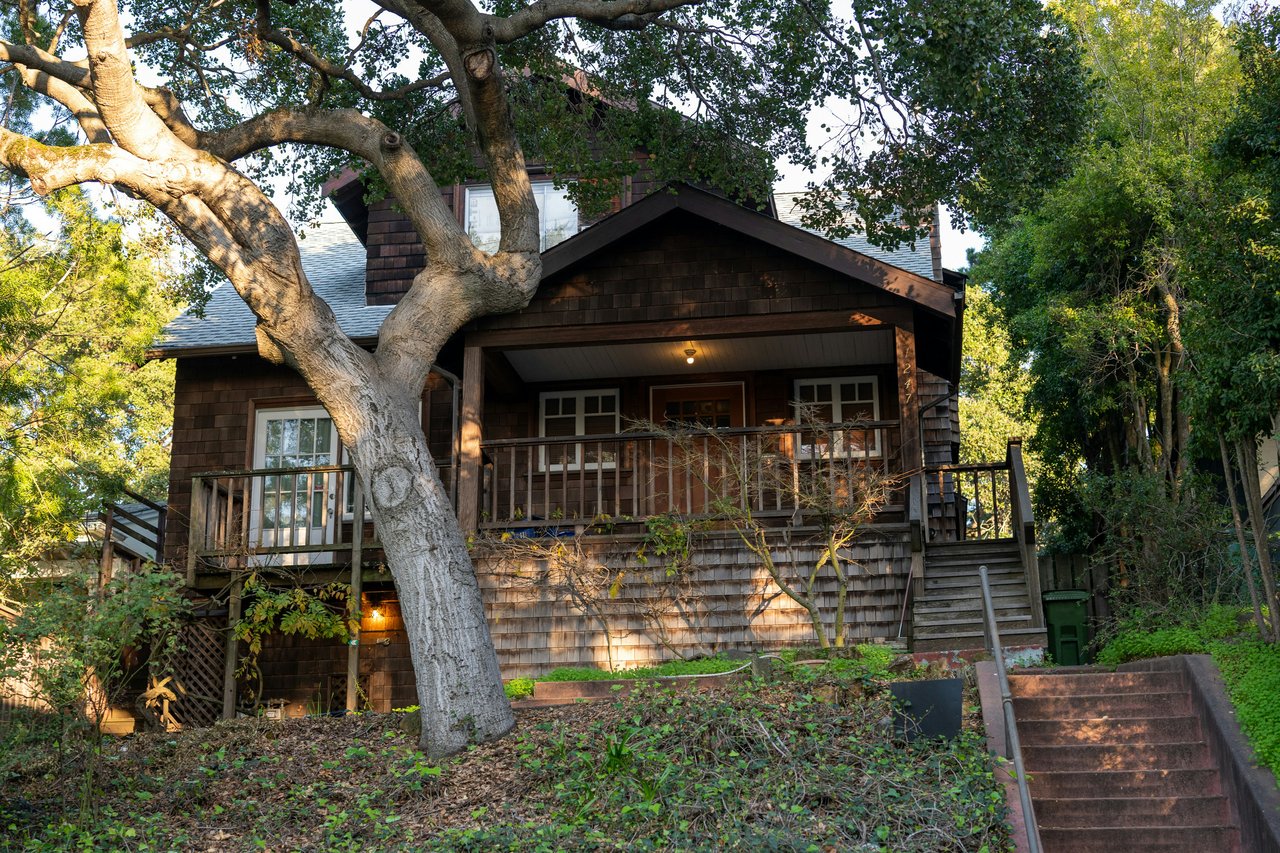
It starts with the exterior walls, with signature, continuous wood-shingle cladding without corner boards. Historically, redwood shingles were often left unpainted to weather into shades of brown.
Other common features include gabled roofs, deep eaves, grouped wood windows, porches, and asymmetrical forms. Brick or stone may appear around foundations, chimneys, and garden walls. The house is often placed in direct conversation with its lot through changes in elevation, terraces, and informal planting.
Not every shingle-clad house is a Brown Shingle, and not every Brown Shingle includes all these features. Some borrow from Swiss chalets, English cottages, or the East Coast Shingle Style. The Berkeley version is best understood as a family of related designs.
Why are Brown Shingles associated with North Berkeley?
Brown Shingles began appearing in Berkeley in the 1890s and became especially influential before World War I. Architects adapted the East Coast Shingle Style to the Bay Area’s climate, materials, and hillside terrain, contributing to what became known as the First Bay Tradition.
North Berkeley was one of the movement’s centers. The Hillside Club promoted homes that followed the land, preserved trees, and used natural materials. Architects including Bernard Maybeck, John Galen Howard, and Julia Morgan worked within this broader circle of ideas.
The influence extended beyond custom architecture. Between roughly 1900 and 1915, builders used versions of the rustic shingle approach across North Berkeley. The local identity became strong enough that similar homes elsewhere in California were sometimes called “Berkeley Brown Shingles,” according to National Park Service documentation for the Daley’s Scenic Park and Hillside Club historic district.
How did the 1923 Berkeley fire change the pattern?
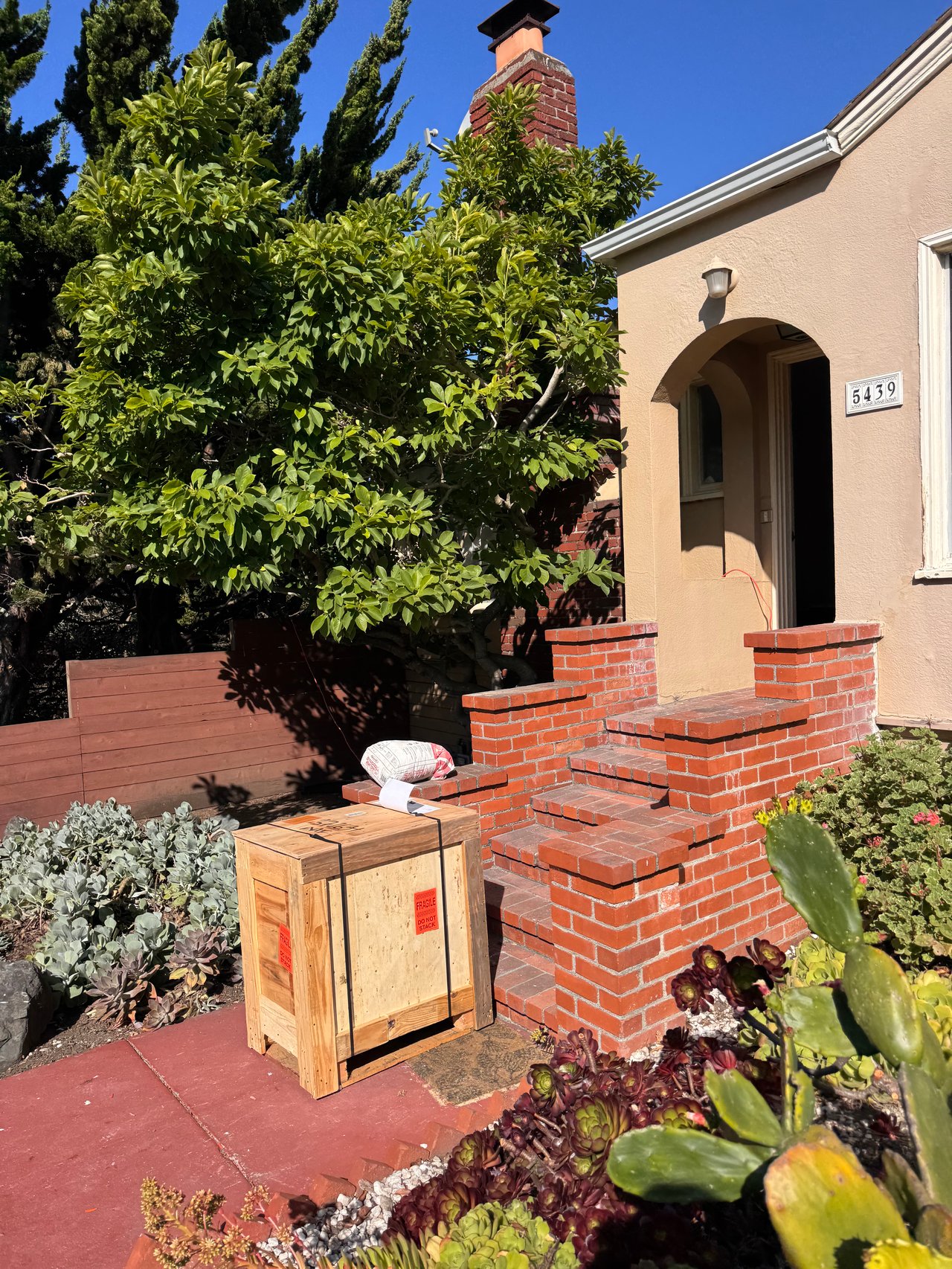
The 1923 Berkeley fire destroyed hundreds of buildings in North Berkeley, including many Brown Shingles and homes designed by prominent local architects. Afterward, replacement houses commonly used more fire-resistant stucco siding and clay tile roofs.
That history helps explain why the architecture can change abruptly from one block to the next. Surviving Brown Shingles show the neighborhood before the fire, while nearby stucco homes often represent the rebuilding that followed.
For a broader look at the area’s homes, streets and daily life, visit our North Berkeley community guide.